Search

Maasai Mara Wild
Bandas Kenya

Wild Bandas is located within the Enonkishu Conservancy, on the northern edge of Kenya’s renowned Maasai Mara ecosystem. Set along the banks of the Mara River, it sits at the intersection of local communities and protected wildlife areas.

Courses held at this site offer valuable insights into the complex dynamics of human-wildlife coexistence, exploring the challenges faced by local herdsmen as they manage livestock and crops alongside native wildlife.

leaves

Experience Mara with EcoTraining

Wild Bandas is located within the Enonkishu Conservancy, on the northern edge of Kenya’s renowned Maasai Mara ecosystem. Set along the banks of the Mara River, it sits at the intersection of local communities and protected wildlife areas.

Courses held at this site offer valuable insights into the complex dynamics of human-wildlife coexistence, exploring the challenges faced by local herdsmen as they manage livestock and crops alongside native wildlife.

Enonkishu was founded in 2009 by Tarquin and Philippa Wood, who, together with their neighbours, established a community working together to protect the fragile north-eastern boundary of the Mara Serengeti Ecosystem. Their aim was to improve livelihoods and maintain heritage through wildlife-compatible land uses such as eco-tourism and improved livestock production.

Today, Enonkishu secures 6,000 acres (±2,500 ha) of wildlife grazing rangelands, owned by the resident community on the edge of the Greater Mara Ecosystem. It has become a world-class wildlife-viewing conservancy, with access to two other conservancies in close proximity: Ol Choro Oiroua Conservancy and Lemek Conservancy.

Send me more information

Fill out the following form to get more information from our friendly team.

Where is the Maasai Mara Wild Bandas Camp located?

Traversing is not limited to Enonkishu alone. We also have access to two other conservancies in close proximity.

Ol Choro Oiroua Conservancy covers 17,000 acres (±7,000 ha) of a group ranch in the northeast section of Maasai Mara wilderness. The conservancy logistics and land are managed by Seiya Limited under the guardianship of Fairmont Kenya.

Lemek Conservancy is another of Kenya’s wildlife management success stories. Most of Lemek-Koiyaki has now merged with the adjoining Mara North, reducing Lemek’s size to around 19,000 acres. The land was once privately owned by Maasai communities before being transitioned to the Koiyaki Group Ranch and Lemek Group Ranch. The conservancy helps protect valuable habitats for flora and fauna while generating revenue for the conservancy and benefiting local communities.

The climate is pleasantly warm, with cool nights, all year round.

The area is located just south of the Equator, at an altitude between 1,500 and 1,900 metres. Temperatures are slightly higher from October to March and slightly cooler from June to August. At night, temperatures can drop below 10°C, especially from June to August.

Animals found in the Maasai Mara

Wildebeest, topi, zebra, and Thomson’s gazelle migrate into and occupy the Mara Game Reserve from the Serengeti plains to the south and the Loita Plains in the pastoral ranches to the north-east, from July to October or later. Herds of all three species are also resident in the reserve.

All members of the “Big Five” — lion, leopard, African elephant, Cape buffalo, and black rhinoceros — are found in the Maasai Mara. Hippopotami and crocodiles are found in large groups in the Mara and Talek rivers. Leopards, hyenas, cheetahs, jackals, and bat-eared foxes can also be found in the reserve.

The plains between the Mara River and the Esoit Siria Escarpment are probably the best area for game viewing, especially lion and cheetah.

Activities at the Maasai Mara Wild Bandas Camp

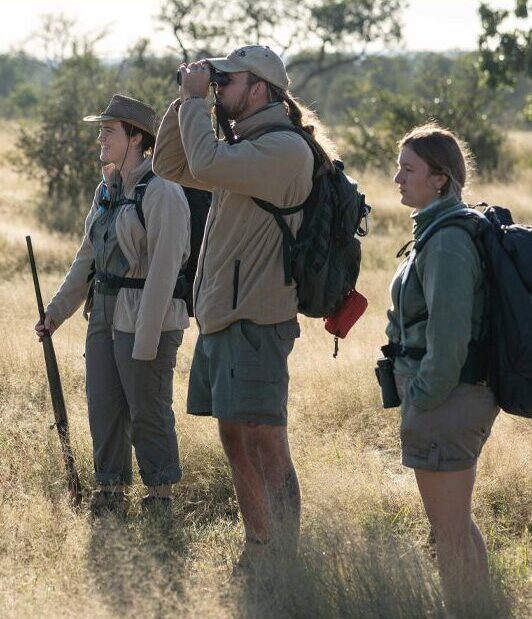
Learning in nature

The Maasai Mara is home to an exceptional variety of wildlife. Wildebeest, topi, zebra and Thomson’s gazelle migrate into the Mara from the Serengeti plains and Loita Plains from July to October or later. The Big Five — lion, leopard, African elephant, Cape buffalo and black rhinoceros — are also found in the Maasai Mara, along with hippos, crocodiles, hyenas, cheetahs, jackals and bat-eared foxes.

Conservation & Community

Courses at Wild Bandas offer valuable insight into the relationship between local communities, livestock, crops and surrounding wildlife. Enonkishu Conservancy is owned by the resident community and was established to protect the northern boundary of the Mara Serengeti Ecosystem while supporting livelihoods through wildlife-compatible land uses such as eco-tourism and improved livestock production.

Exploring the Mara

Wild Bandas provides access not only to Enonkishu Conservancy, but also to the nearby Ol Choro Oiroua and Lemek conservancies. This extended area offers opportunities to experience diverse habitats, wildlife and scenery across the Greater Mara ecosystem.

Wildlife Viewing

The plains between the Mara River and the Esoit Siria Escarpment are considered one of the best areas for game viewing, particularly for lion and cheetah. The Mara and Talek rivers are also home to large groups of hippopotami and crocodiles.

Staying at the camp

En-Suite Bandas

Wild Bandas has six en-suite bandas, each equipped with two single beds and a private bathroom. The bandas comfortably accommodate up to 12 students, offering a rustic and authentic way to stay close to nature.

Dining

Students can enjoy meals in the formal dining area or unwind in the camp's outdoor spaces. A unique natural amphitheatre set into the riverbank provides a stunning setting for bush breakfasts and dinners.

Swimming Pool & Outdoor Spaces

The camp has a beautiful swimming pool with a gazebo and pool house/bar. Students can also relax on the expansive lawns overlooking the Mara River.

Laundry & Housekeeping

All laundry is done by hand daily, and rooms are cleaned and checked twice a day.

Refreshments

Still water, coffee and tea are available throughout the day free of charge.

Medical Information

We are not permitted by law to give advice regarding medical information. Contact a travel clinic at least 3 months before you plan to travel, especially when travelling to East Africa for vaccination requirements.

Please ensure that you have a sufficient supply of personal medication for your trip. EcoTraining cannot arrange to have medication collected and delivered to the camp.

Visit www.traveldoctor.co.uk/ for more information.

Malaria

Due to its privileged location, Laikipia (Enonkishu) is a low-risk malaria zone.

Yellow Fever

Yellow Fever vaccinations are required for Kenya, but please consult your doctor before getting any vaccinations. If you are travelling from a country where Yellow Fever is present, you will need to prove you have been vaccinated.

Other highly recommended vaccinations include:

• Yellow Fever
• Typhoid
• Hepatitis A
• Diphtheria
• Polio and tetanus (Recommended)

Medical Insurance

It is essential to have medical insurance when visiting Kenya. It is also recommended to take out Flying Doctor cover. Flying Doctors can assist with this and costs approximately $20 per person, per year (cost subject to change by supplier).

All you need to do is send the application form directly to Flying Doctors Kenya and pay the subscription fee.

Please inform EcoTraining if you are taking this medical insurance.

Nairobi Office Contact

The Flying Doctors Society of Africa
P.O. Box 30125, 00100 GPO Nairobi, Kenya
Tel: (254 20) 602495 / 6994409-13
Fax: (254 20) 601594
Email: [email protected]
Website: www.flydoc.org

International Learners

In general people are extremely friendly in Kenya, and you will be humbled by their hospitality. But there is real poverty in Kenya, and you will soon realise that you are far richer and more fortunate than most local people you meet. You will probably attract your fair share of souvenir hawkers and beggars but try and take the time to meet ordinary people going about their day-to-day business too. The experience will be worth it. Don’t be afraid to step out of that tour bus, just take some precautions.

Basic safety rules for travellers to Kenya:

• Make a copy of your passport and keep it in your luggage.
• Don’t walk on your own at night in the major cities or on empty beaches.
• Don’t wear jewellery.
• Don’t carry too much cash with you.
• Wear a money belt that fits under your clothes.
• Don’t carry a lot of camera equipment, especially in the major cities.

Electric Travel Authorisation (ETA)

Visitors traveling from all countries (including USA citizens) who require an ETA to enter Kenya must apply and obtain an ETA before boarding an aircraft, as no visas will be issued on arrival. ETA applications are processed through the new electronic processing system: https://etakenya.go.ke/

All applicants will be required to produce the following documents:

• Return air ticket.
• Invitation letter from the host in the Republic of Kenya.
• Letter from employer/institution/college/school.
• Proof of funds (bank statement).
• Copy of your passport.

The processing period for the ETA’s is strictly five (5) working days. Please note that changes are made almost daily; please contact the nearest Kenyan Embassy for more accurate VISA/ETA information and updates.

Passports

All visitors require a valid passport to enter the country. Passports must be valid for six months from the date of entry.

Adaptors

Please bring adaptors to suit your own plugs and Kenyan plug/plug points.

Communication

Kenya has a well-established cellular network with different suppliers. You can buy a prepaid Safaricom SIM card at the airport. Top-up airtime can be purchased at the airport, or on route to the camp. There is good coverage in some places and the airtime is very affordable.

Spending Money

Kenya’s Currency is: Shilling (KES) / KSh. For up-to-date currency conversions, please visit www.xe.com.

Students should try to obtain Shilling before entering Kenya. If this is not possible, the camp will accept US$ only.

Cash

There are no cash withdrawal machines (ATM’s), or card facilities available in camp. Please ensure that you have sufficient cash for at least four weeks.

An estimate of spending money that may be required:

• KSh 2,100 – KSh 2,400 per week.
• US$25 – US$40 per week.

Travellers’ cheques can only be cashed in Nairobi. Visa entry fees are best paid in US$. The camp can accept card payments for drinks only.

Other non-compulsory expenditures to consider:

• Excursions to Mara Triangle, Mara Village, Rhino Sanctuary.
• Tips for Wild Bandas staff (approximately $120 per participant – cash only).
• Drinks at camp or during sundowners.

EcoTraining clothing

Due to restrictions on imported items, no EcoTraining branded merchandise or study material is sold at Wild Bandas.

Getting to Camp

GPS coordinates for Wild Bandas

S1° 03′ 17.9″, E35° 13′ 52.3″

Please note: All travel before and after the course is to be arranged by yourself. The EcoTraining staff are available should you need further advice.

For directions to the camp, please contact our enquiries department.

Start your wildlife career

55-day Kenya Field Guide Course

This course is endorsed by the FGASA (Field Guide Association of South Africa). It covers a broad spectrum of subjects, using a mix of formal lectures and time out in the field.

28-day Kenya Safari Guide Course

EcoTraining’s signature Kenya Safari Guide course is a 28-day adventure-packed experience learning about nature and wildlife at our Masai Mara Wild Bandas Camp in Kenya.

7/14-day Maasai Mara EcoQuest Course

This programme is designed to immerse you in the captivating dynamics of Kenya’s wildlife areas, providing a safari experience in one of the world’s most iconic locations.

Kenya Camp & Courses Gallery

Testimonials