Greater Kruger Timbavati
South Africa
Timbavati is located in the Greater Kruger area, within a private nature reserve that borders Kruger National Park. The camp sits on the banks of the Klaserie River, surrounded by wild, unfenced terrain.


Experience Greater Kruger Timbavati with EcoTraining
The Timbavati landscape is classic Lowveld, an ever-changing tapestry of open savanna, riverine woodland, and dense thickets. Towering jackalberry and leadwood trees line the Klaserie River, where elephants, buffalo, and birds regularly gather. These rich habitats provide a perfect setting for immersive walking trails and exceptional game drives.
Covering over 53,000 hectares, the reserve is home to the Big Five and more than 40 other mammal species, as well as over 350 species of birds. Timbavati is one of the few places in the world where the rare white lion may be seen in the wild. In summer, the bush comes alive with birdsong and the fresh scent of rain-soaked soil. In winter, wildlife flocks to the river’s edge, offering unforgettable sightings in the golden dry-season light.
Call me back
Fill out the following form and get a call back from our friendly team.
Where is Greater Kruger Timbavati located?
Timbavati Camp is located in South Africa’s Limpopo and Mpumalanga provinces, within the heart of the Timbavati Private Nature Reserve. As part of the Greater Kruger National Park’s open ecosystem, this vast area shares an unfenced western boundary with Kruger, allowing wildlife to move freely across the landscape. The camp is found on the banks of the Klaserie River, in a region celebrated for its natural beauty and ecological diversity.
24°20’59.2″S
31°09’25.9″E
Summer temperatures at Timbavati range between 35–37°C during the day and drop to the mid-20s°C at night. Winter days are cooler, averaging 18–25°C, with nighttime lows reaching 4°C. While winter showers are rare, summer often brings dramatic thunderstorms or longer periods of gentle rain.
Activities at Greater Kruger Timbavati
The Timbavati Private Nature Reserve offers a diverse and rewarding learning environment, teeming with life and rich in ecological variety. This is an ideal setting for aspiring guides to develop bush skills and conservation awareness.
Wildlife sightings
Timbavati is known for its excellent game viewing and iconic Lowveld landscape. The reserve is home to the Big Five: lion, leopard, elephant, buffalo, and rhino, along with over 40 other mammal species. Students may also encounter giraffe, zebra, warthog, hyena, and antelope species such as kudu, impala, and nyala. With more than 350 recorded bird species, the area is also a paradise for birding enthusiasts.
Conservation projects
As part of your training, you’ll participate in meaningful conservation work. Projects may include bush clearing, erosion control, and habitat management tasks that contribute directly to the health and sustainability of the reserve.
Daily walks & drives
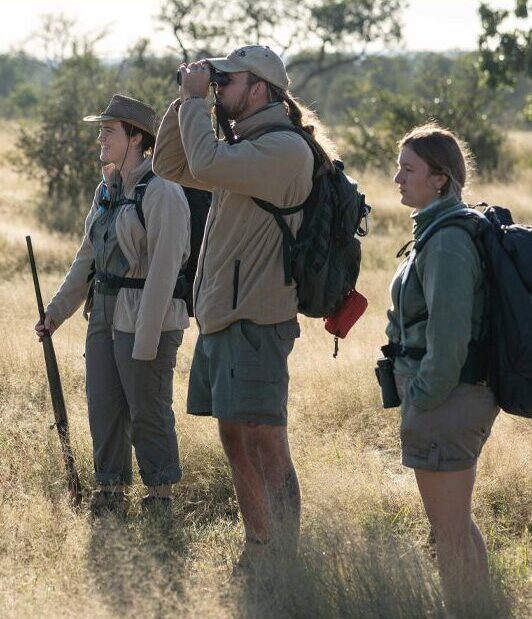
A highlight of your stay will be the daily bush walks and game drives led by our experienced instructors. These guided outings offer the chance to observe wildlife up close and develop key skills in tracking, ecology, and field navigation. Each outing presents new learning moments and unforgettable encounters.
Additional activities
Timbavati’s tranquil setting allows for fully immersive nature experiences. Between activities, students can relax in the communal area overlooking the dam, where hippos and crocodiles are frequent visitors. The camp also has a small, well-stocked library with a variety of field guides and reference books to support your learning. At night, the bush comes alive with sound, and the absence of city lights reveals spectacular stargazing opportunities.
Staying at the camp
Tents
The camp consists of 10 walk-in Meru-style canvas tents, each shared by two students.
Bedding
Each tent contains two single beds with bedding provided (a duvet and one pillow).
Ablutions
There are shared ablution facilities available.
Mosquitoes
There are no mosquito nets at the camp.
What to bring
An additional blanket, and additional pillow, should you require it.