As close on 900,000 matriculants decide what to study and where to study (amidst increased competition for limited spaces at the country’s leading universities), Anton Lategan, MD of EcoTraining, believes there is another path – one which develops leadership and professional skills that transfer far beyond guiding and conservation careers.
“We know competition for university places is intense,” says Lategan. “We also know that for many young adults, many of whom have only just turned 18, ‘what next’ is a difficult decision.”
For Lategan, field guide courses – which can range from 30-day introductions to year-long professional training programmes – shouldn’t only be seen as a ‘niche’ option for future safari guides but as a chance to explore opportunities in conservation and ecotourism while developing skills that employers value across the board.
“We’re not just training guides,” Lategan explains. “We’re developing adaptable professionals who can read environments, make sound judgments under pressure, communicate across cultures, and lead diverse teams.”
Even more so, Lategan believes these programmes develop the type of skills that not only look great on a CV – but that are often missing in younger generations, including communication skills, people skills, adaptability, resilience and a calm authority that open doors across multiple sectors.
The immersive nature of the training contributes significantly to skills development.
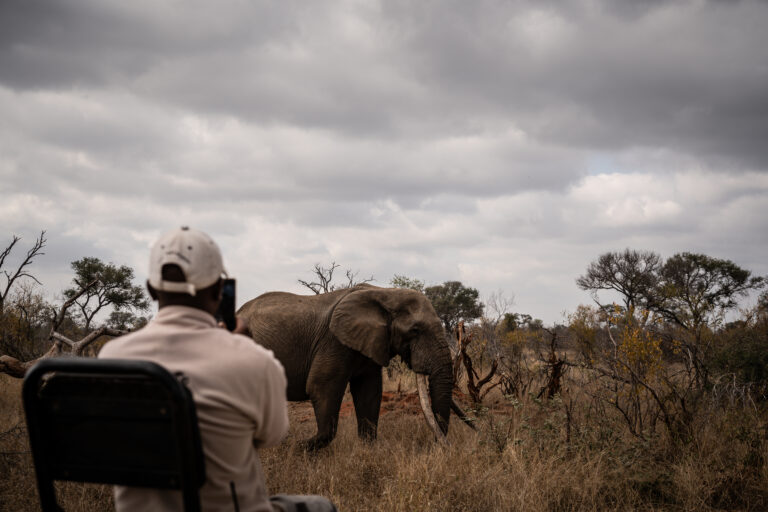
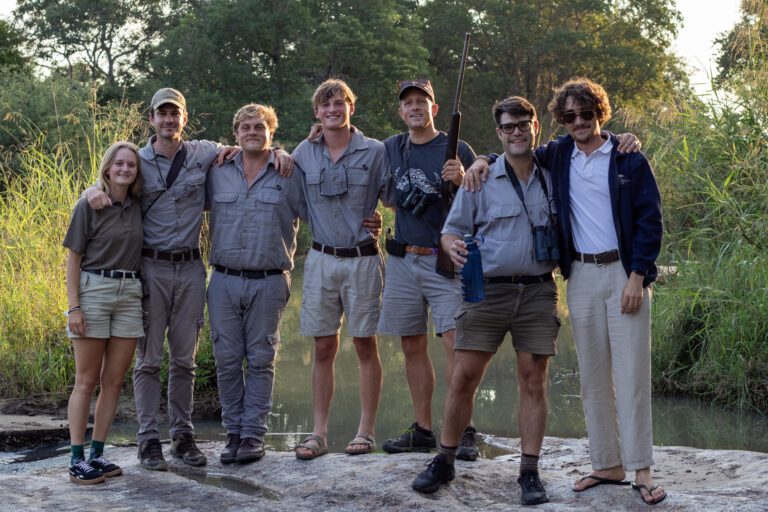
Depending on the course, students live, learn, and work in the field (without today’s online distractions). They develop emotional intelligence through daily collaboration – from cooking rotations to campfire conversations, tracking partnerships and navigating interpersonal challenges in close quarters.
And it all starts with self-awareness.
“Once you know who you are, and you understand both your environment and your place in it, you are able to navigate yourself and lead others,” says Lategan. “It’s an incredibly empowering experience.”
In addition, EcoTraining maximises practical training. “It’s a great way to get out of your comfort zone,” says Lategan. “Afterall, the best lessons are learned with mud on your boots and at the heels of incredible teachers, guides and environmentalists.”
The hard skills:
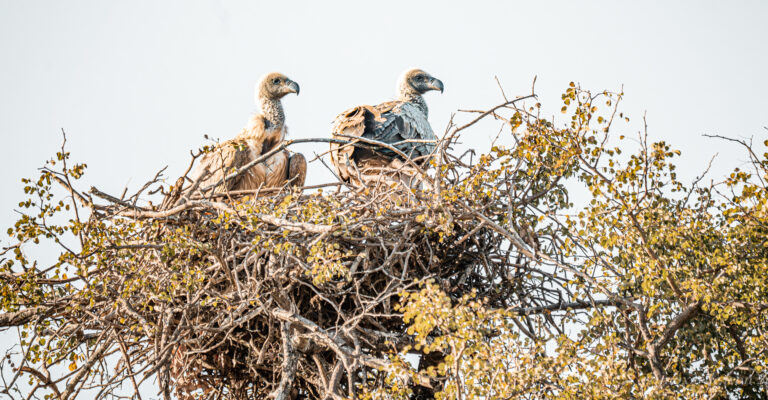
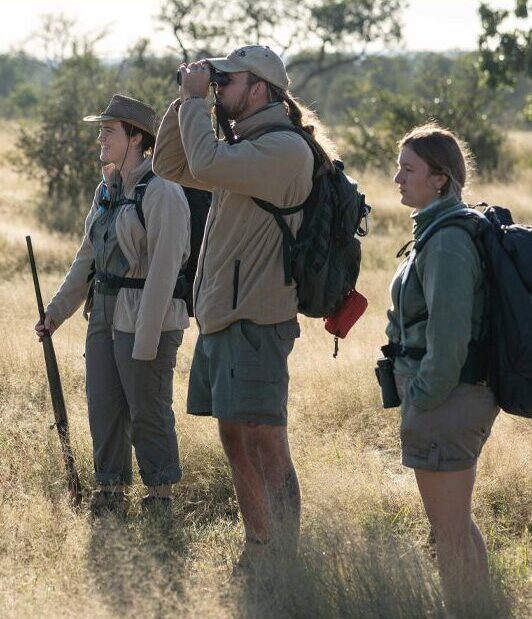
For young adults looking for a future career rooted in nature and the environment, a gap year in the bush allows them to earn certificates in wilderness medicine, tracking, advanced rifle handling and advanced birding alongside nature site guide qualifications.
The soft skills:
Problem-solving, critical thinking, communication, teamwork, conflict resolution, adaptability, self-management, stress management, work ethic and continuous learning. In other words, it’s everything employers want – with one crucial difference. These graduates have real-life examples proving they can deliver under pressure.
Much of the deeper learning centres on judgment and decision-making. Students learn when to push through discomfort and when to prioritise safety, how to balance ambition with risk management, when to lead decisively and when to defer to collective wisdom. Experienced guides contribute decades of accumulated fieldcraft knowledge, teaching students to read environmental indicators, interpret animal behaviour, and understand subtle ecological patterns. But they also model the judgment calls that define effective leadership in any context.
For Lategan, one of the most exciting and gratifying aspects is watching students from diverse backgrounds developing confidence and leadership in real time. “You can see them grow and mature,” says Lategan. “And that self-belief becomes the foundation for everything that follows, whether they pursue conservation careers or move into entirely different sectors.”
As gap year options multiply for South African school leavers, programmes that develop both technical expertise and solid life skills offer an interesting alternative to immediate university entry – and a life-changing experience they will never forget.
A FGASA and CATHSSETA-qualified guiding course.
Immerse yourself in the African wilderness, expand your knowledge, and embark on a transformative learning experience with EcoTraining.
Sign up for one of our Career Courses today!
For more information on our Career Courses, contact [email protected] or call +27 (0)13 7522532
Student interview with Edward Caplan
In this video, we meet Edward Caplan, an EcoTraining Professional Field Guide student who lights up when he shares some highlights while on the EcoTraining course. Having had many highlights, Edward narrows it down to the many connections he made with various people with whom he shared a common interest. Being part of a smaller group, he got to know his fellow students well. They formed friendships with people from all over the World. Laughing together over the same things had an incredible bonding experience for Edward. Other than the people, he also favours their incredible sightings, and as he says: “It is mind-blowing how close you come to these animals.”