How to become a birder?
Back in the day, ornithologists were often perceived as nerdy outdoor enthusiasts who ran around parks and forests with a pair of binoculars glued to their eyes. However, in the last couple of years, bird watching has undergone a rebranding. We call ourselves „birders” now, everywhere in the world, from New York (yes, I‘ve gone on bird walks there) to Cape Town, from southern Germany to southern Africa. People have discovered the joy of birding.
But how do you actually get things started and become one of these people who log their birds in an app, get overly excited about a new lifer (a bird that you see for the first time) and can cry for hours over a bogey (a bird that you’ve been looking for forever but keep on missing). Here is your step-by-step guide on how to become a birder.
Come prepared
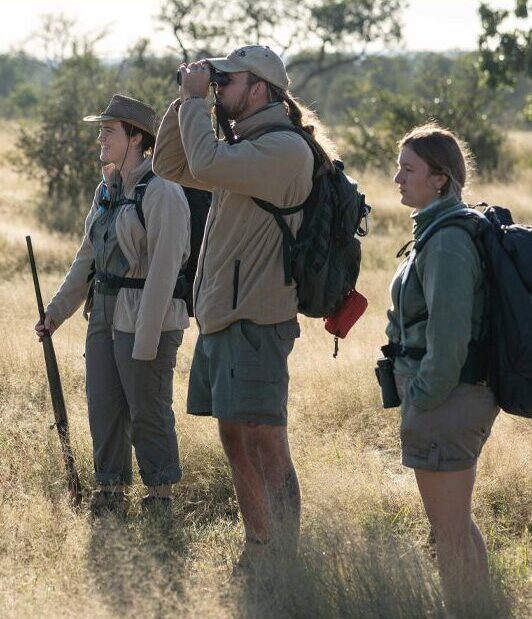
No worries, there is not much equipment needed, but good binoculars are a must. I recommend at least 10×42 when it comes to size, and the rest is up to you and your budget. Also, get yourself a bird app – not only to log the birds you saw, but also to identify them (and practice their calls if you are into it). I personally use Robert’s for Southern Africa and Merlin for Europe and the States.
Get friends who are into birds
Yes, birding is perfect for some alone time in nature, but to get into the topic in the first place, it helps to surround yourself with people who share your passion. Not only is birding contagious, but you can also learn from more experienced birders and benefit from their knowledge. It’s often much easier to understand wing structures, flight patterns, breeding behaviour, migration routes, and so on when discussing them with someone instead of just reading about them in a book.
Look!
It was during my trails course that I really got into birding. And our instructor Ross Hawkins, a very passionate birder, told me one thing that stuck with me: “The most important thing is that you look.”
Look at the GISS (general impression of size and shape), the colours, the way the bird is flying and what it is doing. Very quickly, you’ll learn to distinguish between the doves and the weavers, the morning birds and the nocturnal birds, the raptors and the LBJs (the little brown jabs – excuse my birding lingo). Once you start identifying them, the excitement is on, and you’ll find yourself sitting next to a bird bath studying them for hours. And the true beauty of it: You can do this all around the world, because birds are (almost) everywhere.
Find yourself a bogey (or two)
Once you get the general idea that birds are really cool, you’ll notice yourself speaking about certain birds more and more. Birds that are very rare, that you’ll find only at a specific time in a particular spot throughout the year. And you will want to see this bird, dedicating every drive and walk to finding it, even when you keep missing it again and again. But then there will also be tears of joy, rounds of drinks for everyone and just pure contentment once you manage to see another of your bogeys. Welcome to the club, you’re officially a birder now.
Go where the bird(er)s are
As mentioned earlier, birds are basically everywhere. BUT: Some places are fascinating when it comes to bird life. There is a reason why there are so many birding trips to certain areas. So, going to these special destinations with a group of other dedicated people definitely keeps the excitement up. For me, Makuleke in the Northern Kruger is one of those places The bird life here is incredible: I saw my first Racket-tailed Roller here (and yes, this one was my personal bogey, it took me three trips to find it), the Pel’s Fishing Owl, an Arnot’s Chad and many other “Makuleke specials”.
Call it a trend or a lifestyle, but the fact is that birding has always been a beautiful way to connect with nature, explore the world around you, and engage with wildlife in a profoundly personal way. So get your binoculars, go outside, and find your favourite bird!
Join EcoTraining on our next Birding in the Bush course and discover your internal love and fascination for the beautiful birds of Africa!
Sign up for our Birding in the Bush Course today!
For more information on our Birding in the Bush Course, contact [email protected] or call +27 (0)13 7522532
What to expect from the Advanced Birding course?
Today, we join EcoTraining Instructor Duncan Mckenzie, who gives us insight into the Advanced Birding course, including its structure, what you will learn, and the mindset you might take from it. Birding is one of the world’s largest and most popular hobbies and can be done anywhere, e.g., from your office window to parks and more. What makes birding so attractive is that you can plan your weekends away by going on birding trips and getting your friends involved or even combine it with other hobbies like fishing or hiking.